
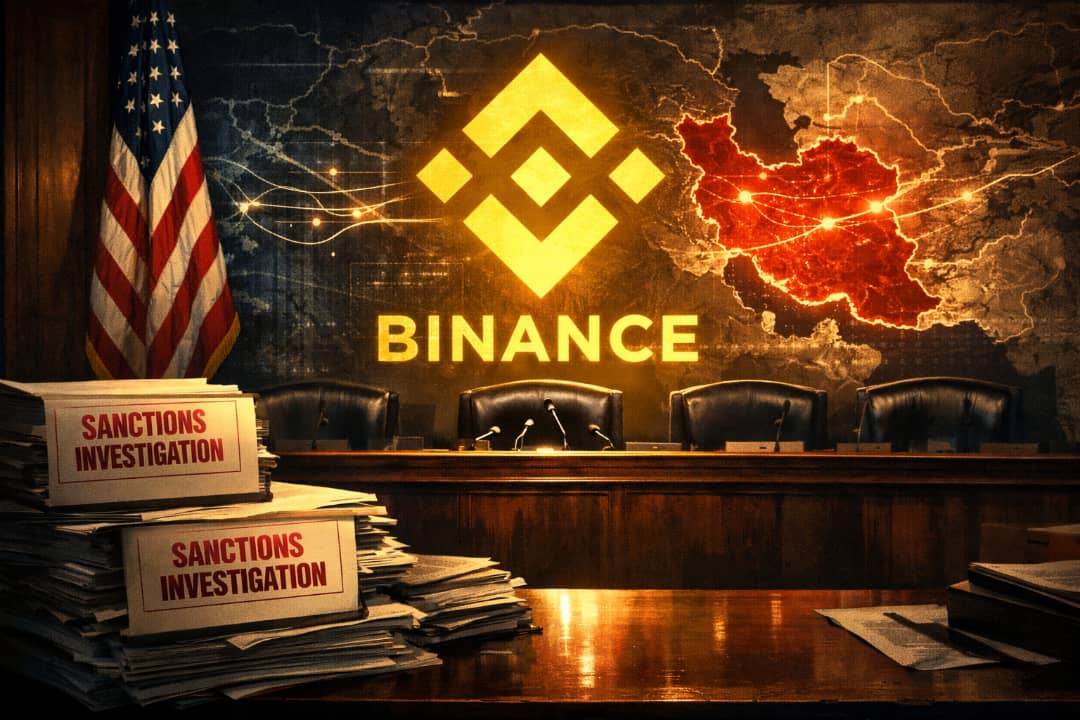
Richard Blumenthal has formally launched a Senate investigation into Binance over reports that as much as $1.7 billion in cryptocurrency transfers may have flowed through the exchange to entities linked to Iran and other sanctioned networks between 2024 and 2025.
According to reporting highlighted by CoinDesk, the Connecticut Democrat is demanding detailed records from Binance regarding its compliance controls, internal communications, and any exposure to sanctioned jurisdictions.
The probe marks a significant escalation in U.S. scrutiny of the world’s largest crypto exchange and raises fresh questions about how global trading platforms enforce sanctions compliance in an increasingly complex regulatory environment.
Allegations Center On $1.7 Billion In Suspected Transfers
At the center of the inquiry are reports suggesting that internal compliance teams at Binance identified thousands of accounts accessed from Iran. Those accounts allegedly facilitated substantial transfers routed toward wallets associated with Iran’s Islamic Revolutionary Guard Corps and other proxies.
Blumenthal’s investigation focuses on whether up to $1.7 billion in crypto transactions may have moved through the exchange to Iran-linked entities despite existing U.S. sanctions.
In a formal letter addressed to Binance CEO Richard Teng, the senator requested documentation related to:
- Compliance monitoring procedures
- Account records tied to Iran-based users
- Internal investigations into flagged transactions
- Communications regarding dismissed or suspended compliance staff
Blumenthal questioned why flagged activity was not prevented and why employees who reportedly raised internal concerns were later removed or sidelined. His letter directly challenges Binance’s adherence to both U.S. sanctions law and international compliance standards.
The investigation signals that lawmakers are no longer focusing solely on crypto’s theoretical risks, they are now demanding concrete accountability from major exchanges operating at global scale.
Senate Inquiry Raises Questions About Compliance Controls
The senator’s letter places particular emphasis on Binance’s internal oversight mechanisms. He seeks clarity on whether compliance systems failed to block sanctioned activity or whether enforcement gaps allowed funds to flow unchecked.
The inquiry also probes reported internal tensions within Binance’s compliance division. Blumenthal specifically requested communications tied to the dismissal of compliance personnel, suggesting concern that whistleblowers or internal risk officers may have been silenced.
Such questions carry regulatory weight. Exchanges operating internationally must enforce strict Know Your Customer (KYC) standards and implement transaction monitoring systems capable of identifying high-risk jurisdictions.
If Binance’s internal teams flagged activity linked to Iran but failed to halt it, lawmakers could interpret that as a breakdown in enforcement controls rather than an isolated compliance oversight.
Blumenthal has given Binance until March 6 to turn over internal communications, account data, and compliance documentation.
Binance Denies Violations And Cites Compliance Improvements
Binance has categorically rejected the allegations, stating that its internal review found no evidence of sanctions violations. The exchange maintains that it has no Iranian users and that it operates a strict KYC framework designed to prevent prohibited access.
The company further asserts that suspicious transactions were reported to law enforcement authorities in accordance with regulatory obligations.
Binance also pointed to a reported 97% reduction in direct exposure to sanctioned Iranian entities since January 2024. According to the exchange, that decline demonstrates the effectiveness of its compliance upgrades and enhanced monitoring systems.
The company confirmed that it is conducting an internal review and will share the results with the U.S. Department of Justice by February 25.
The denial underscores a broader tension in the crypto sector: exchanges must operate globally while navigating an increasingly fragmented sanctions landscape.
Investigation Comes After Historic 2023 Justice Department Settlement
The Senate probe arrives less than two years after Binance reached a landmark settlement with the United States Department of Justice in 2023.
That agreement included a $4.3 billion fine and sweeping compliance commitments, making it one of the largest corporate settlements in U.S. history involving a crypto firm.
Under the terms of that settlement, Binance agreed to strengthen anti-money laundering controls, enhance reporting obligations, and submit to independent compliance monitoring.
Blumenthal’s investigation raises the possibility that additional regulatory pressure could follow if the exchange fails to satisfy the Senate’s inquiry. Lawmakers may examine whether Binance fully implemented its post-settlement compliance commitments.
Failure to cooperate or produce satisfactory documentation could expose the company to further penalties or intensified oversight.
Growing Regulatory Scrutiny Intensifies Pressure On Global Exchanges
The investigation reflects a broader shift in Washington’s approach to digital asset platforms. U.S. regulators and lawmakers increasingly view crypto exchanges as systemically important financial intermediaries rather than fringe trading venues.
With billions of dollars moving daily across global platforms, compliance enforcement has become central to national security concerns, particularly when sanctioned jurisdictions are involved.
Blumenthal’s inquiry signals that lawmakers expect exchanges to proactively prevent prohibited activity, not merely respond after the fact. It also suggests that internal compliance culture is under scrutiny as much as transaction volume itself.
For Binance, the stakes are high. The exchange remains the largest by trading volume worldwide, and renewed scrutiny could affect partnerships, licensing approvals, and international regulatory relationships.
The coming weeks will determine whether Binance’s internal review and documentation satisfy Senate investigators. If the exchange provides evidence that its systems detected and mitigated risk appropriately, the matter may de-escalate. If not, further hearings, enforcement actions, or financial penalties could follow.
As crypto markets mature, regulatory expectations are rising in parallel. The Binance probe illustrates a critical reality: global exchanges operating in multiple jurisdictions must now meet standards comparable to traditional financial institutions, or face intensified oversight from lawmakers and enforcement agencies.
The outcome of this investigation may shape how compliance frameworks evolve across the digital asset industry in the years ahead.
Disclosure: This is not trading or investment advice. Always do your research before buying any cryptocurrency or investing in any services.
Follow us on Twitter @themerklehash to stay updated with the latest Crypto, NFT, AI, Cybersecurity, and Metaverse news!
