
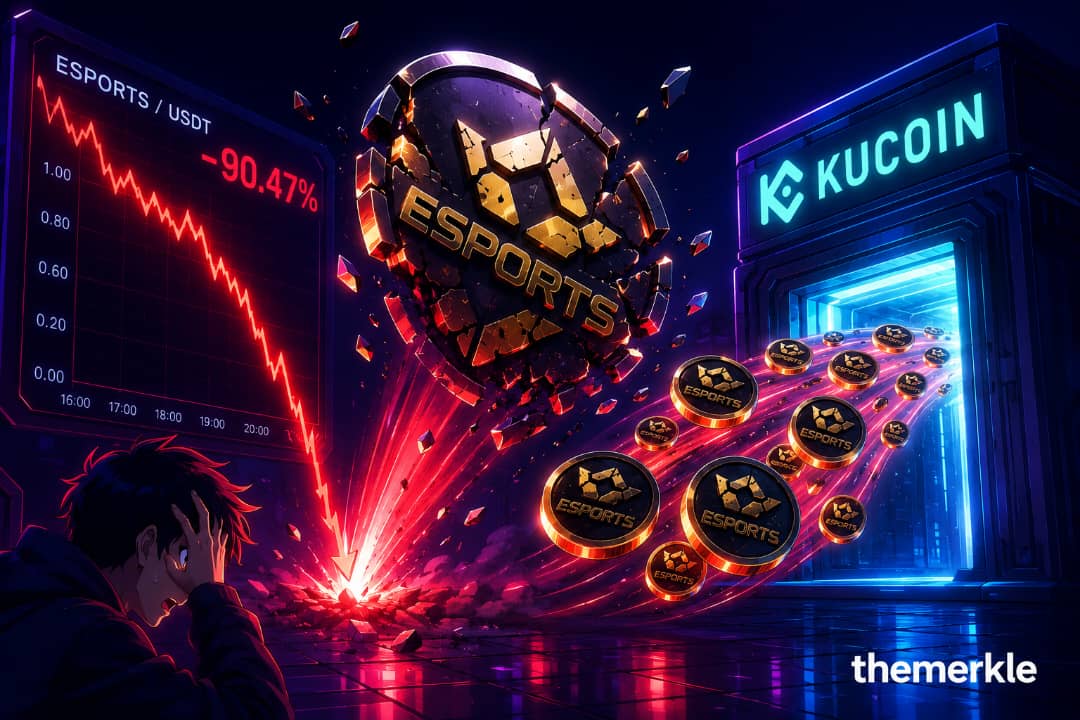
The ESPORTS native token on the BNB Smart Chain was left decimated after an organized dump from wallets allegedly linked to project insiders.
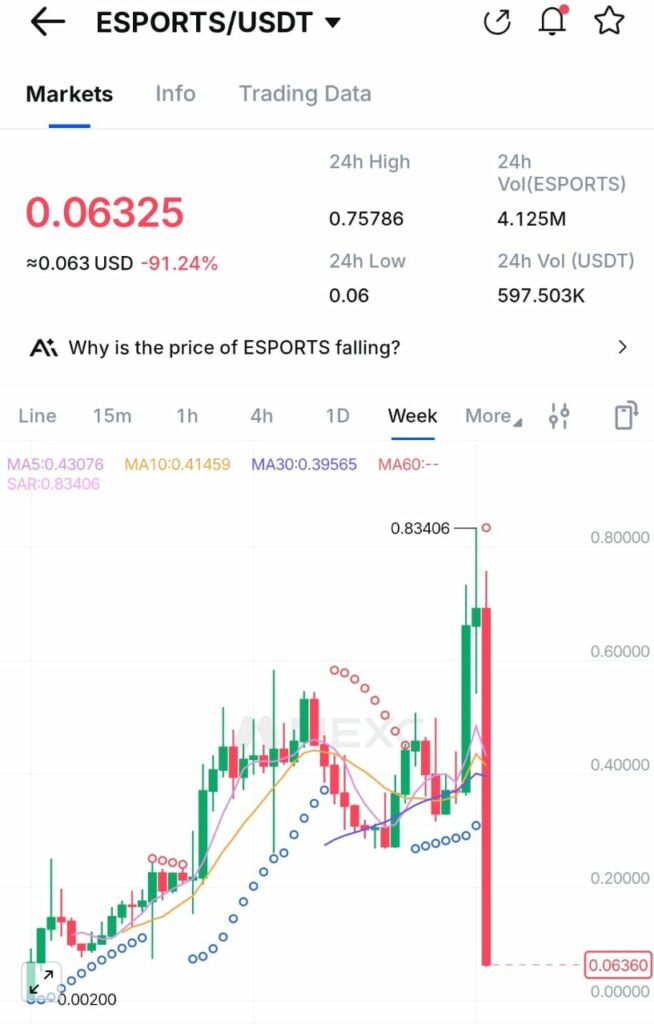
Only two hours later, the value of the token fell by over 90%, sparking confusion in the crypto community and immediate alarm bells about internal governance and transparency.
On-chain data accurately identifies the spark for the liquidation event at 18:18, triggering a savage sell down. When the dust settled, around 178 million 12.76 million.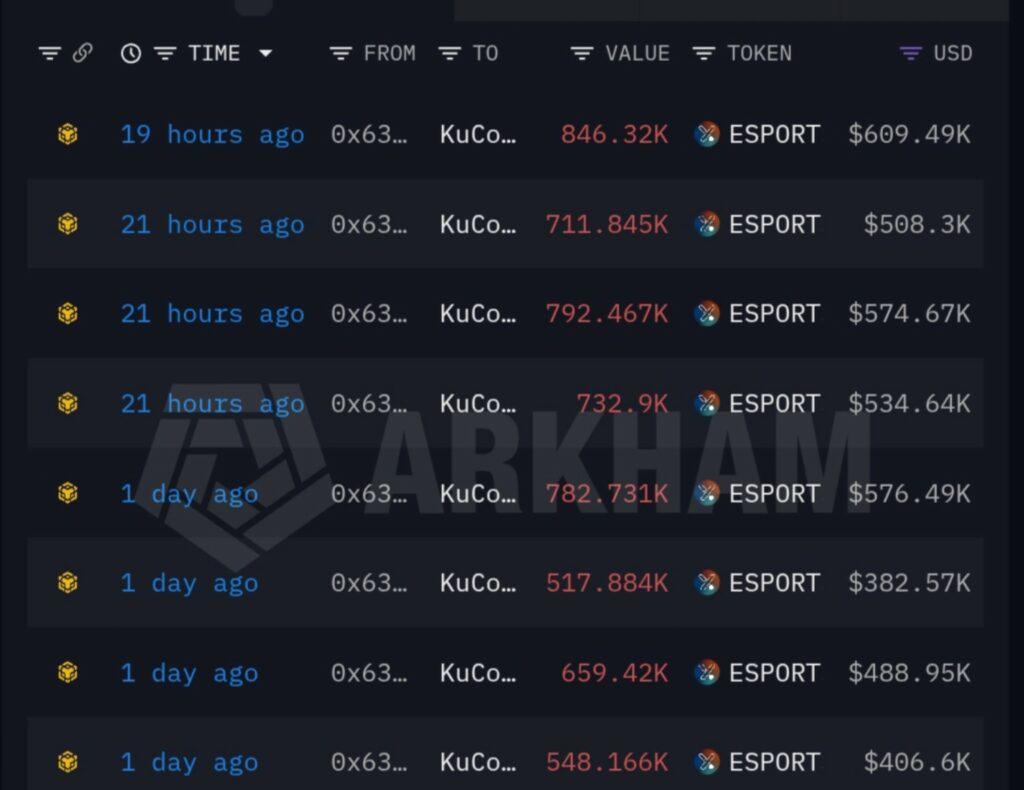
Real-time tracking of wallet activity by crypto analysts provided early clues, with comprehensive accounts making rounds after publication via X. This report showed how both huge and rapid that sell-off was as it occurred.
Pre Crash Warnings From On-Chain Signals
While the collapse may have seemed sudden for many retail investors, closer inspection shows that signs of a brewing storm had been accumulating in the days before. When analyzing on-chain metrics, unusual movement of tokens among several wallets associated either with members of the project’s panel or someone closely related to the early enthusiasts and special backers were identified.
Substantial 23 million worth of tokens had built up on exchanges such as KuCoin, an act suggesting a strategic plan in advance rather than natural market behavior.
Well in advance of this development, community members monitoring these developments had flagged the patterns ahead of time and soon enough discussions began surfacing on social media such as WiseAdviceSumit’s analysis on X with participants promoting flagging concerns over how liquidity was building steadily on exchanges.
$ESPORTS just nuked 85% 💀
Onchain warning signs reportedly showed up days earlier:
• Team/VC wallets started moving size
• Funds split into fresh wallets
• Tokens slowly sent to exchanges
• ~$23M reportedly hit KuCoin before the dumpSmart money watches wallets first 👀 pic.twitter.com/bmbbHXEuDu
— Wise Advice (@wiseadvicesumit) May 25, 2026
KuCoin Listing Fanning The Fallout
As the timing of its crumbling seems all-too-convenient, the ESPORTS token had only just debuted on KuCoin three days earlier because of which scrutiny intensified. This gave the listing an exponential increase in attention, liquidity and hopes/disappointment across investors due to the high potential that this token brings between gaming and blockchain.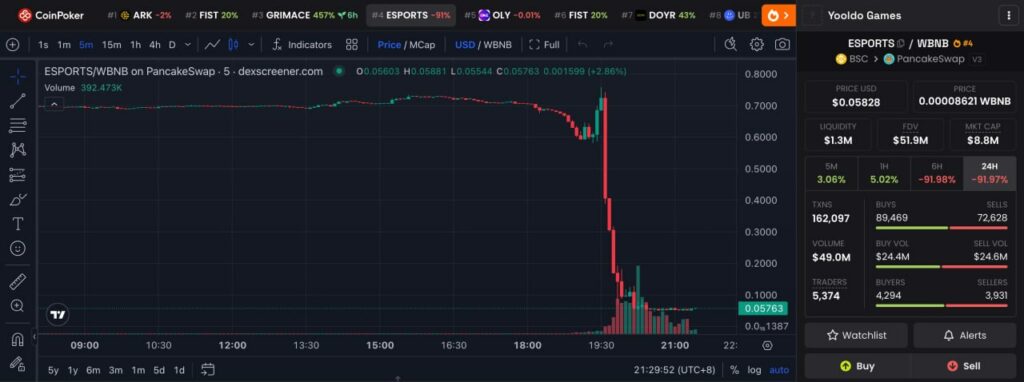
But the coinciding of the listing and sell-off has caused some to wonder whether there was a purposeful timing to take advantage of liquidity and retail excitement. One of the most favorable exit points for large holders is often major exchange listings backed by hype and high trading volumes.
Such events (or “liquidity exits” as they are called) have prevailed throughout the history of crypto markets in previous bull market cycles; insiders take full advantage of newly unlocked liquidity by selling large stakes at advantageous prices right before a market-wide collapse.
The Anatomy Of The Sell-Off Strategy
The way the sell-off occurs suggests a thoughtful and measured response rather than panic selling. Since the sellers spread their tokens across a multitude of wallets and deposited the consummations in stints on exchanges, they didn’t set off any quick alerts which might have been incurred by a gigantic single transaction.
When there was enough liquidity accumulated on trading platforms, the coordinated dump started embodying a rapid sell coordination that destroyed buy-side demand within minutes. Without any opportunity to realise their bags, this rapid execution led into a flood wave of price collapse crushing latecomers and retail investors alike.
Attribution is further complicated through the use of multiple wallets because it becomes more difficult to ascertain exactly which person or company a wallet may belong to. However, the consistency in how and when the wallets behave indicates that some of these actions are coordinated rather than independent.
Erosion Of Trust, Community Reaction
This sparked immediate backlash in the crypto community, with social media being suffering from angst and ridicule. A number of recurring themes emerged, with many calling attention to the need for better transparency and governance norms across nascent token projects plagued by insider-led collapses.
As a result, the incident further entrenches skeptical attitudes among retail investors toward new tokens, especially those undergoing explosive hype cycles without any proven performance history. The perception of insiders utilizing insider positions to leave through peak liquidity has greatly reduced the trust within ESPORTS.
More than a one-off incident, this episode sheds light on a systemic problem with the crypto ecosystem: The highly skewed information and power asymmetry between insiders and the general public. Blockchain has the potential to make transactions extremely visible from a high level, but since most people cannot translate this complex data into actionable insights in real time, blockchains inherently lack transparency.
Lessons for the Market Going Forward
The collapse of the ESPORTS token demonstrates that on-chain transparency by itself, is no protection for investors. However, linking suspicious activity on public ledgers necessitates a high level consideration for much of the retail circle looking on.
For investors, the event demonstrates the need to monitor wallet activity, token distribution dynamics and a healthy degree of caution with newly-listed assets attracting flows in rapid time. When to warn? Wallet splitting, incremental deposits on an exchange platform or too big liquidity sudden movements are patterns that often precede significant market moves.
The incident triggers new calls for stronger accountability frameworks, better disclosure rules, and robust tooling to learn how to read on-chain data. In the absence of such protections, other instances are highly probable to occur undermining confidence and delaying wider adoption.
If you extend your view to the wider blockchaining world, this crash isn’t just the tale of the single token, the ESPORTS collapse points more broadly to one struggling marketplace trying to find equilibrium between innovation and access. With this, as the sector matures, an increasing ability to detect these signs and act accordingly will be crucial for both investors and the market as a whole.
