
Things are getting interesting in the stablecoin race, and this update is one of those that may initially appear simple, yet effectively changes a lot behind the scenes.
Native Stablecoins USDS and sUSDS launched on Avalanche Sky Ecosystem has officially launched its native stablecoin, USDS and sUSDS, which will introduce in the decentralized finance sector that embodies excellent qualities.
This rollout comes via this announcement from here, represents a major paradigm shift in cross-chain liquidity and direct asset movement between the networks themselves.
It, on the surface, is another integration. At a glance, it looks like growth, but on closer inspection, it goes deeper than that; infrastructure.
There is argument to be made that native stablecoin wrappers are actually not that great and just a backwards way of getting around limits of the chain but I guess this makes them worse since they completely circumvented using wrappers.
The way that the assets are deployed is one of the coolest aspects about this launch. They are native to Avalanche, not wrapper tokens, not synthetic counterparts, but established assets on the chain itself. That is far more important than it may sound.
Wrapped assets typically incur several tradeoffs: additional layers of risk, reliance on custodians, and fractured liquidity – amongst other things. Sky Ecosystem is avoiding that path in order to keep things clean and optimized from the very beginning.
That just works much better for the users. It streamlines some of the needless intricacies for developers.
Skylink Bridge Provides A More Direct Method To Transfer Liquidity
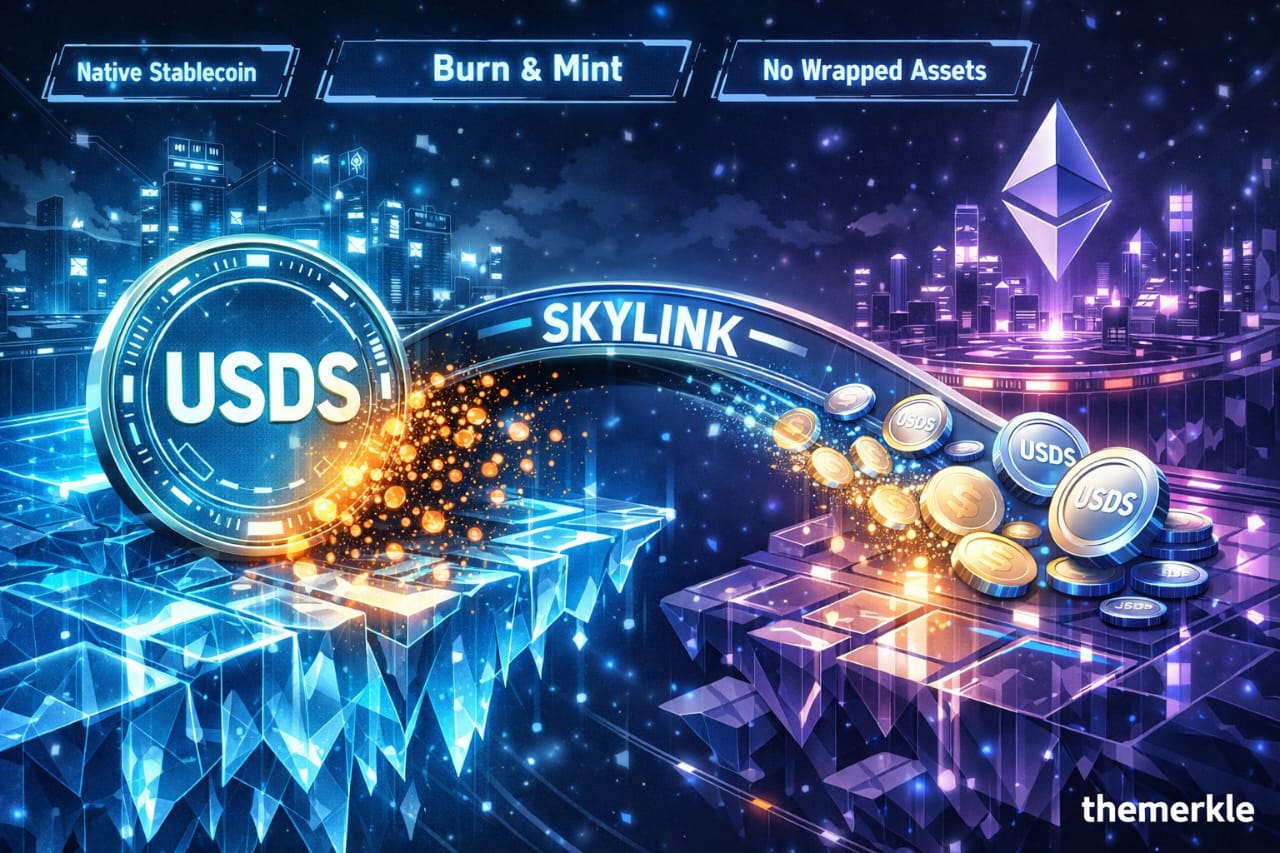
Skylink, which is the cross-chain bridge to utilize in the entire ecosystem, makes all this possible. Skylink enables users to transfer assets directly from Ethereum mainnet to Avalanche, with assistance by Grove Finance.
No third-party bridges. No middle-layer getting in the way.
Skylink supports a burn-and-mint system instead, which allows tokens to be burned on one chain and the equivalent minted alongside. That means assets are not duplicated, rather that it is essentially moved.
It’s a subtle change, but an important one nonetheless. Historically speaking, bridges are one of the weakest points in crypto security.
Burn-and-mint mechanism changes how liquidity is managed.
For traditional bridging systems, this often leads to capital sitting idle in bridge contracts. That makes it a target , one that attackers have hunted again and again over the years. You aren’t going to get that same idle liquidity here.
Whenever the assets move, they gets burn on one side and minted on the other. It is not like the big pool is there sitting and waiting to be taken advantage of. It doesn’t eliminate all risk, but it does cut down a significant attack surface.
And in this day and age, that is a significant deal.
Key Parameters Remain Under Governance Control
Even with the technical updates, governance is still on the table.
Just like with Fast money (the parameters for USDS and the tokens responsible for target ratios) issuance and system rules, are managed by Sky Ecosystem governance.
The angle to strike between decentralization and control is something that most DeFi projects are still trying to perfect. Too much centralization, and you take the decentralization out of range.
If they are missing something, systems become ungovernable or unable to adapt. So this setup appears to be targeting something in between.
Expanding into Institutional Subnets of Avalanche
Choosing Avalanche as the tech is also a strategic decision.
Avalanche is largely focused on institutional use cases, primarily through its subnet architecture. That growth is the reason behind Sky Ecosystem’s decision to launch USDS natively here.
This is not merely retail users shifting stablecoins about. It’s also about the bigger players, funds, enterprises and financial platforms, all of which need liquidity rails that are efficient and dependable.
This makes for a few changes from a builder s perspective. To begin with, stablecoin liquidity is more easily available cross chains.
Second, it reduces the complexity to integrate cross-chain payments or DeFi functionality.
Developers will pay far lower costs by using one bridging provider, and working against a single token standard instead of multiple standards.
While it does not fix every problem, it eliminates certain friction that has hindered cross-chain development for years.
Smoothing Out Stablecoin Infra The Quiet Way
Updates like these fall under the radar since they never come with over-the-top headlines.
Infrastructure grows like this, humbly.
Recent developments are not new tokens or protocols, but a more efficient way of connecting existing systems and how they function. And that’s how a lot of long-term values actually comes from.
The crypto ecosystem is still constantly divided. Users, liquidity pools, and applications are unique to different chains.
The ability to fit those pieces together, without piling on too much risk, is one of the hardest things in the space.
Enter solutions like Skylink. They don’t just move assets. They attempt to do so in a less risky manageable way.
Not Quite A Panacea, But Progress
Just to say, this is not a bulletproof solution for cross-chain issue. Bridges, even better bridges, are still risky.
And adoption will rely on the performance of this system around over time period. This is, however, atleast a step in the right direction compared to the older avenues.
More broadly, this launch says something about the future of stablecoins. They are not sitting on a single chain anymore.
By design, and this is their direction to become multi-chain; they have the infrastructure to back that. This is all part of a wider movement to make the Sky Ecosystem stablecoins more =adaptable and universal.
And for the broader market, it is another indication that work needs to be done not on only asset creation but also how those assets move from point A to point B.
This is not the type of update that magically makes prices skyrocket overnight at the end of the day. But it is change that influences how systems function in the background.
Bringing Sky Ecosystem’s USDS and sUSDS to Avalanche through Skylink isn’t really about hype, it’s more about building solid infrastructure.
And in crypto, things like groundwork tend to matter a whole lot more than it initially appears to.
Disclosure: This is not trading or investment advice. Always do your research before buying any cryptocurrency or investing in any services.
Follow us on Twitter @themerklehash to stay updated with the latest Crypto, NFT, AI, Cybersecurity, and Metaverse news!
