
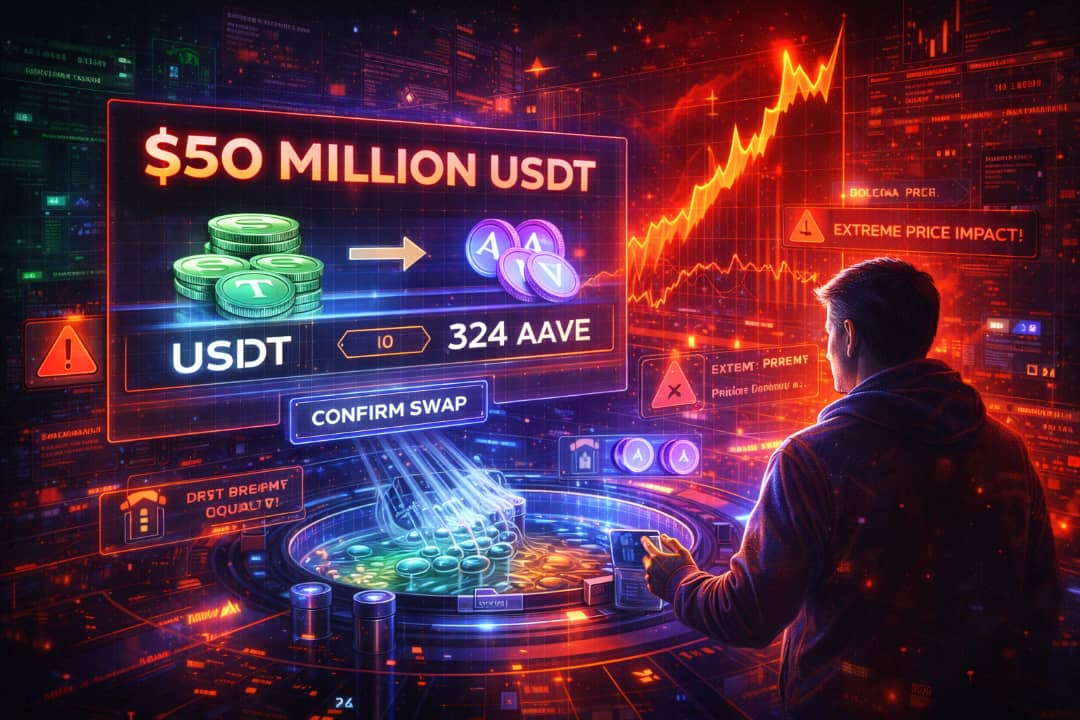
A massive decentralized finance trade has drawn widespread attention after a user attempted to purchase AAVE tokens using 50 million USDT through the Aave interface but ended up receiving only 324 AAVE in return.
The transaction, which involved unusually high price impact, quickly became a talking point across the crypto community and reignited discussions about user protection mechanisms in decentralized finance.
The incident occurred through Aave’s integrated swap interface and was ultimately routed through CoW Swap’s infrastructure. While the trade technically executed as designed, the scale of the loss highlighted the risks associated with large on-chain trades and the importance of understanding price impact warnings.
Following the event, Aave founder Stani Kulechov addressed the situation publicly, stating that the team intends to contact the affected user and refund approximately $600,000 in fees collected during the swap.
Earlier today, a user attempted to buy AAVE using $50M USDT through the Aave interface.
Given the unusually large size of the single order, the Aave interface, like most trading interfaces, warned the user about extraordinary slippage and required confirmation via a checkbox.…
— Stani.eth (@StaniKulechov) March 12, 2026
User Confirms Warning Before Executing Trade
According to the explanation from the Aave team, the platform had displayed a warning to the user before the transaction was finalized. Due to the unusually large size of the order, the interface flagged the trade as carrying extraordinary slippage and price impact.
To proceed, the user had to manually confirm the risk by ticking a checkbox acknowledging the warning.
The transaction therefore did not occur accidentally. The interface required explicit approval from the user before execution could continue. After confirming the warning on a mobile device, the user went ahead with the swap, which resulted in receiving only 324 AAVE tokens in exchange for the 50 million USDT.
The interface had already shown a rough estimate of the potential outcome before the trade was confirmed. At the time, it displayed a projection indicating the user would receive less than 140 AAVE for the full amount if the trade went through under those conditions.
Even with these warnings in place, the user accepted the quote and allowed the transaction to proceed.
Engineers Clarify That Price Impact Was The Real Issue
Shortly after the incident began circulating online, some observers initially described the situation as an extreme slippage event. However, Aave engineers later clarified that slippage itself was not the root cause.
Instead, the issue came from the user agreeing to a quote with nearly 99% price impact.
In decentralized exchanges, price impact occurs when a trade is so large relative to available liquidity that it dramatically shifts the asset’s market price during execution. When a trader accepts a quote under these conditions, the swap may execute at a drastically worse rate than typical market prices.
Aave engineer Martin Grabina explained that the interface clearly presented the quote before execution. The system also warned the user about the magnitude of the price impact before allowing the swap to proceed.
To be more precise, the issue wasn't slippage, it was user accepting a quote with high price impact (while being warned and accepting to proceed). More technical analysis here https://t.co/LrvdERqHcy
— Stani.eth (@StaniKulechov) March 12, 2026
According to the team, the trade therefore worked exactly as the system intended. The user received the quoted output after confirming the risk warnings presented by the interface.
CoW Swap Infrastructure Performed As Intended
Another key aspect of the situation is that the transaction was routed through CoW Swap, a decentralized trading protocol designed to optimize trade execution and minimize MEV-related risks.
Aave’s swap interface integrates with CoW Swap routers as part of its standard infrastructure for executing token trades. The routers aggregate liquidity and attempt to deliver the best available price under current market conditions.
In this particular case, the routing system behaved exactly as expected.
The integration followed widely accepted industry standards and did not malfunction during the transaction. Instead, the outcome was driven primarily by the enormous size of the trade relative to available liquidity.
Large swaps can quickly drain liquidity pools and push prices significantly higher during execution. When a trader attempts to buy tens of millions of dollars’ worth of a token in a single transaction, the order may dramatically move the market.
Because of this, large trades are often broken into smaller orders to reduce price impact. In decentralized environments, however, users retain full control over how their transactions are structured.
Aave Plans To Refund $600K In Fees
Despite the transaction executing correctly from a technical standpoint, the Aave team has expressed sympathy for the user involved.
Stani Kulechov stated that the protocol intends to reach out directly to the trader and return approximately $600,000 in fees collected during the swap.
While the platform is not obligated to reverse or compensate trades that occur through user confirmation, the decision reflects a goodwill gesture toward the affected participant.
Events like this are not unheard of in decentralized finance, but the scale of the transaction makes it particularly notable. Trades involving tens of millions of dollars are still relatively rare in DeFi interfaces, especially when executed as a single order.
The team acknowledged that while the system functioned as designed, the result was clearly far from optimal for the user.
DeFi Industry Faces Calls For Better Safeguards
The incident has sparked renewed conversations about how decentralized finance platforms can better protect users without compromising the core principle of permissionless access.
One of DeFi’s defining features is that anyone can interact with smart contracts freely, without needing approval from centralized intermediaries. This openness allows innovation to flourish, but it also places responsibility on users to understand the risks associated with their transactions.
According to the Aave team, the challenge lies in finding a balance between user freedom and protective guardrails.
While the platform already displayed warnings and required explicit confirmation, the event highlights how even clear alerts may not always prevent costly mistakes—especially when trades involve extremely large amounts of capital.
As a result, developers across the DeFi ecosystem are increasingly exploring additional safeguards that could help reduce similar incidents in the future.
Potential solutions might include stronger warnings for extreme price impact, trade-size recommendations, or interface adjustments that encourage users to split large orders into smaller transactions.
For now, Aave says its team will investigate possible improvements to prevent similar scenarios going forward.
The broader lesson from the incident is clear: decentralized finance provides powerful tools for financial autonomy, but those tools require careful use—particularly when millions of dollars are involved.
Disclosure: This is not trading or investment advice. Always do your research before buying any cryptocurrency or investing in any services.
Follow us on Twitter @themerklehash to stay updated with the latest Crypto, NFT, AI, Cybersecurity, and Metaverse news!
